Investing in a generator isn't just buying a piece of equipment; it's a strategic decision, a commitment to uninterrupted power that pays dividends when you need it most. Truly understanding its long-term value, however, goes far beyond the initial purchase price. For businesses and homeowners alike, mastering your Long-Term Generator Ownership Costs & ROI is the key to unlocking true resilience and maximizing your returns.
When that power outage hits, the true value of your generator is realized instantly: it starts on demand, carries its load, and maintains health over years of service. But what does it really take to ensure that reliability? Let's break down the economics.
At a Glance: What You Need to Know
- Beyond the Sticker Price: The initial purchase is just one part of the Total Cost of Ownership (TCO). Factor in logistics, installation, commissioning, maintenance, monitoring, and even end-of-life considerations.
- The Real Cost of Downtime: Power outages can easily cost businesses five figures per hour. For homes, it's safety, comfort, and critical needs. A generator protects against these losses.
- New vs. Used: Used units can offer significant savings (30-50%) but demand rigorous verification (hours, inspection, load bank test). New units offer warranties and the latest tech.
- Fuel Matters: Diesel excels for transient loads but needs "wet stacking" prevention; natural gas is clean but requires specific utility checks; propane is great for remote sites but needs storage planning.
- Commissioning is Crucial: This initial setup and testing protects your warranty, validates performance, and prevents long-term issues. Don't skip it.
- Maintenance Isn't Optional: Regular PM (Preventative Maintenance) keeps your generator reliable, preserves its value, and prevents costly emergency repairs.
- ROI Beyond Money: While direct financial savings are clear, the intangible benefits—peace of mind, safety, and continuity—are invaluable.
The Hidden Cost of Doing Nothing: Outage Risk
Imagine your facility suddenly plunged into darkness, or your home without heat in a winter storm. What's the immediate impact? For businesses, power outages translate directly into significant financial losses, potentially reaching five figures per hour for even modest sites. This isn't just lost production; it includes the time it takes to restart operations, safety risks to employees, potential penalties for missed deadlines, and spoilage of perishable goods.
A properly sized generator, paired with an Automatic Transfer Switch (ATS) to seamlessly switch power sources, significantly reduces the duration and severity of these losses. Add scheduled exercise and regular load bank testing, and you've built a robust shield against the unpredictable. This proactive approach turns potential financial drain into sustained operational continuity.
Beyond the Sticker Price: Unpacking Your Total Cost of Ownership (TCO)
The true Long-Term Generator Ownership Costs & ROI can't be assessed by the initial price tag alone. To build a realistic budget and understand your full investment, you need to look at the Total Cost of Ownership (TCO). Here's what goes into it:
1. Acquisition: Your Initial Investment
This is the most obvious cost: the price you pay for the generator itself. You have two primary paths here: new or used equipment.
- New Units: These come with the latest engine and controls technology, a factory warranty, and the ability to customize specifications precisely to your needs. The trade-off? Lead times can range from weeks to months, and the capital outlay is higher.
- Low-Hour Used Units: Often, you can find quality used generators offering 30-50% savings compared to new. They provide immediate availability and a lower upfront capital cost. However, this path demands diligent verification:
- Verified Hours: Ensure the hour meter readings are accurate and supported by the unit's condition or service records.
- Multi-Point Inspection: A thorough check of all components is essential.
- Full Load Bank Test: This is non-negotiable. The unit must be tested to its rated kW, logging voltage, frequency, and temperature. A written report is your proof of performance.
- Functional Accessories: Check that critical accessories like the block heater and battery charger are operational.
We'll dive deeper into the new vs. used decision shortly, but remember, over a five-year period, a well-chosen used unit with a robust preventative maintenance plan can often deliver a lower cost per protected hour.
2. Logistics: Getting It There
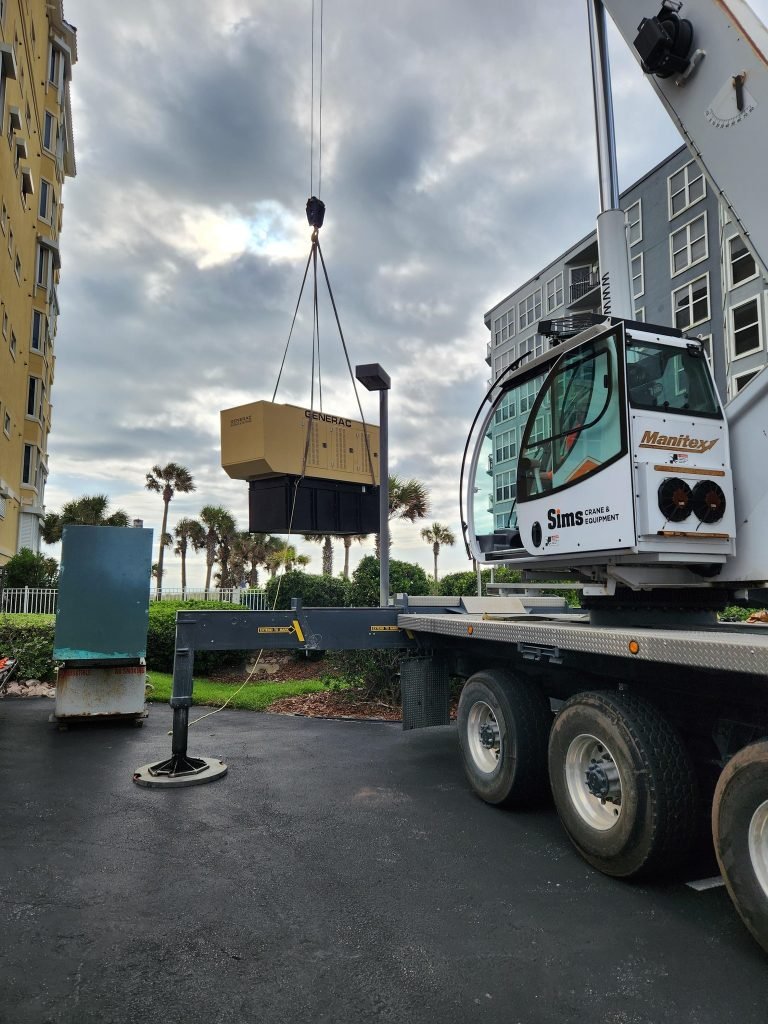
Don't underestimate the complexity and cost of moving a generator. Freight costs are calculated based on the unit's weight, dimensions, and the route it needs to take, often requiring special permits for oversized loads. Then comes rigging and craning: getting the generator off the truck and onto its pad requires specialized equipment and expertise to match your site's lift height and reach capabilities.
3. Installation: Making the Connections
Once on site, the generator needs to be integrated into your existing infrastructure. This involves:
- Fuel System/Gas Tie-in: Connecting to a fuel tank (for diesel or propane) or a natural gas line, ensuring all required clearances and safety codes are met.
- ATS/Controls Integration: An experienced electrician will connect the Automatic Transfer Switch and control panel to your facility's electrical system, ensuring seamless power transfer.
4. Commissioning: The Critical First Steps
This isn't just flipping a switch; commissioning is a crucial step that protects your warranty and ensures your investment delivers on its promise. It's about initial setup and testing, verifying every system performs as designed. We'll detail this further, but expect checks on settings, alarms, and a witnessed load bank test with a written report.
5. Maintenance: The Long-Term Commitment
Like any complex machinery, a generator requires ongoing care. This includes preventative maintenance (PM), replacement parts (filters, belts, hoses), and consumables (oil, coolant). For diesel units, you'll need a plan for fuel maintenance (polishing, testing) or, for propane, ensuring adequate storage and delivery schedules. This is a recurring cost over the generator's 5-10+ year lifespan, but it's essential for reliability and longevity.
6. Monitoring: Staying Connected
For many owners, remote monitoring is a non-negotiable feature. This involves setting up systems to track your generator's status, performance, and send alerts in case of issues. The cost here covers hardware, software, and sometimes a subscription service.
7. End-of-Life: What Happens Next?
Finally, consider the generator's eventual end-of-life. Will it have resale value? Can it be redeployed to another site? Planning for this can influence your acquisition choice and overall long-term ROI. A well-maintained generator, especially from a reputable brand, will hold its value better.
Understanding understanding generator cost in its entirety, beyond just the purchase, is crucial for financial planning and maximizing the value of your investment.
Fueling Your Resilience: Operational Costs and Choices
The type of fuel your generator uses significantly impacts both its initial setup and ongoing operational costs.
- Diesel: Diesel generators are champions for strong transient response, meaning they handle sudden, large motor loads or step changes in demand exceptionally well. They are robust and reliable. However, they demand regular exercise and periodic load bank testing. Why? Running diesel generators at light loads for extended periods can lead to "wet stacking," where unburnt fuel accumulates in the exhaust system. Load bank testing counteracts this by raising exhaust temperatures to burn off deposits. Additionally, diesel fuel itself requires maintenance—polishing and testing to prevent degradation and contamination.
- Natural Gas: If utility gas is available, natural gas generators offer clean operation and typically longer runtimes without needing on-site fuel storage. During commissioning, it's vital to verify gas pressure, BTU content, adequate pipe sizing, and regulator performance to ensure the generator receives a consistent and sufficient fuel supply, especially under full load.
- Propane: For remote sites where natural gas isn't an option, propane is a viable alternative. However, this requires appropriately sized storage tanks to accommodate your desired runtimes and anticipated delivery schedules. Adherence to local codes for tank location and safety is paramount.
Insight: When modeling runtime costs, always use local fuel prices, not national averages. Prices can vary significantly by region and change frequently, making localized data essential for accurate budgeting.
The ROI Protector: Why Commissioning and Maintenance Aren't Optional
These two elements are not just line items in a budget; they are the bedrock of your generator's reliability and the primary guardians of your investment's ROI. Skipping or skimping on either is a fast track to problems, voided warranties, and costly repairs.
Commissioning: The Grand Opening
Think of commissioning as your generator's "grand opening" – a comprehensive, methodical process to ensure every component is properly installed, configured, and functioning in harmony with your facility. This critical step protects your warranty and prevents long-term issues that could undermine your ROI.
What does it involve?
- Site Checks: Verification of proper clearances around the unit, adequate airflow for cooling, and safe egress.
- Fuel System Integrity: For diesel, this means checking fuel quality and proper tank connections. For natural gas, it’s verifying gas pressure and flow.
- Electrical Breaker Settings: Ensuring correct configuration for safe and effective operation.
- Controller Configuration: Programming the generator's brain with the right settings, alarms, and operating parameters specific to your needs.
- ATS Function Tests: Testing the Automatic Transfer Switch to confirm seamless and correct power transfer between utility and generator.
- Remote Monitoring Setup: If applicable, configuring and testing the remote monitoring system to ensure alerts are routed correctly.
- Witnessed Load Bank Test: This is non-negotiable. The generator is run at stepped loads, often up to its full rated capacity, to verify its ability to produce stable voltage and frequency within specification, without overheating. A signed report, detailing these performance metrics, is invaluable for warranty claims, insurance purposes, audits, and significantly boosts resale value.
Maintenance: The Ongoing Vigilance
A disciplined maintenance plan is what keeps your generator's reliability sky-high and fiercely protects its asset value. Remember, engines age even when idle; seals can dry, batteries can drain, and fuel can degrade.
- Preventative Maintenance 1 (PM1): This is typically an inspection-focused service, often scheduled monthly, quarterly, or semi-annually based on your risk tolerance and operational environment. It includes visual checks, fluid level top-offs, and critical oil/coolant samples. These samples are sent to a lab for analysis, detecting early signs of wear or contamination.
- Preventative Maintenance 2 (PM2): This is a more comprehensive annual service. It includes everything in PM1, plus essential consumables replacement: oil and filter changes, fuel filter replacement, and air filter checks. Crucially, a periodic load bank test should be incorporated into your PM2 schedule, especially for diesel units that might not consistently run under heavy load.
- Records are Gold: Maintain meticulous records of all signed reports, lab results, and any corrective actions taken. These records are vital for warranty claims, demonstrate compliance for auditors, and significantly enhance the generator's resale value, proving its history of proper care.
Making the Smart Choice: New vs. Used Generators
The decision between a new and a low-hour used generator is a pivotal one, directly impacting your Long-Term Generator Ownership Costs & ROI. Each path offers distinct advantages and considerations:
New Generator Advantages:
- Current Technology: You get the latest in engine efficiency, emissions controls, and digital control panel capabilities.
- Factory Warranty: Comprehensive coverage provides peace of mind against manufacturing defects.
- Custom Specifications: You can tailor every aspect of the unit to your exact needs, from enclosure type to advanced monitoring systems.
- Predictable Performance: Brand-new components mean you're starting with zero wear and tear.
Considerations: Higher upfront capital cost and lead times that can stretch from weeks to several months.
Low-Hour Used Generator Advantages:
- Immediate Availability: Used units are often in stock and can be deployed quickly, critical in emergency situations or tight project timelines.
- Lower Capital Costs: As noted, savings of 30-50% compared to new are common, significantly impacting your initial investment.
- Proven Performance: Many "low-hour" units have seen minimal use, often from standby applications, offering essentially new performance at a discount.
Critical Requirements for Used Units: To ensure you're getting value and not inheriting problems, demand the following: - Verified Hours: Not just what the meter says, but confirmation that the hours match the unit's overall condition and any available service records.
- Multi-Point Inspection: A comprehensive check by a qualified technician covering engine, alternator, controls, cooling system, and ancillary components.
- Full Load Bank Test with Report: This is paramount. The generator must be tested to its full rated kW capacity (e.g., if it's an 800 kW unit, it runs at 800 kW). During this test, critical parameters like voltage, frequency, and temperature are logged. A written, signed report is your proof that the unit performs as advertised under load. Companies like Generator Source verify nameplate data, hour meter readings, conduct a 31-point inspection, and perform these crucial load bank tests.
- Functional Accessories: Ensure accessories like the block heater (essential in cold climates) and battery charger (keeps batteries topped up) are working correctly.
The bottom line: a low-hour used unit, carefully vetted and paired with a robust PM plan, can offer a significantly lower cost per protected hour over its lifespan, providing an excellent ROI.
Demystifying the Details: Key Verification Points for Any Generator Purchase
Whether new or used, knowing what to look for in a generator listing—and what questions to ask—is crucial for making an informed decision and ensuring your investment meets your needs.
When reviewing a generator, pay close attention to these details:
- Hours: Are the hour meter readings verified, matching the unit's condition and any available service records? This is especially critical for used units.
- Brand: Does it come from a reputable manufacturer with strong parts support? Think Caterpillar, Cummins, MTU, Generac, Kohler, HIPOWER, or Multiquip. Parts availability directly impacts maintenance costs and uptime.
- Alternator: What is its configuration? A 12-lead reconfigurable alternator offers valuable voltage flexibility (e.g., 480V, 240V, 208V), allowing you to adapt the generator to different voltage requirements in the future or for redeployment.
- Controller: What model is it? What are its inputs, outputs, and, importantly, its remote monitoring options? Modern controllers offer advanced diagnostics and connectivity.
- Enclosure: What type is it? Is it merely weather-protected (open frame with a roof) or fully sound-attenuated (designed to significantly reduce noise)? Sound attenuation is often a requirement for urban or residential installations.
- Fuel System: What are the specifics? For diesel, is there a base tank (built into the skid) or a day tank plan? What are the required clearances for fuel storage and safety?
- Emissions Rating: Where applicable, especially for larger units or certain regions, what is the emissions rating? This is critical for permitting and environmental compliance.
- Accessories: Does it include essential accessories like a block heater (for cold starts), a battery charger (to keep starting batteries ready), motorized louvers (for airflow control), or an external breaker (for added safety and isolation)?
- Action: If a listing lacks critical details, always request data plate photos and comprehensive test reports from the seller. Transparency here is a strong indicator of a trustworthy vendor.
Quantifying the Unquantifiable: The ROI of Peace of Mind
While we've focused heavily on the financial aspects of Long-Term Generator Ownership Costs & ROI, it's important to recognize that some of the greatest returns are intangible, yet profoundly impactful.
Quantifiable Benefits:
- For Businesses: Preventing direct financial losses is paramount. This includes avoiding lost revenue from halted operations, disrupted supply chains, contractual penalties, and the spoilage of perishable goods. A generator is a direct investment in business continuity.
- For Residential Owners: While not always measured in dollars, the costs of a residential outage can be substantial. A generator prevents frozen pipes in winter, maintains critical medical equipment (oxygen concentrators, CPAP machines), keeps food from spoiling in refrigerators and freezers, and supports remote work-from-home productivity.
Intangible Benefits:
Here's where the value truly shines beyond the ledger:
- Enhanced Comfort & Convenience: During an outage, a generator maintains heating and cooling, keeps the lights on, powers entertainment, and ensures hot water. This isn't just luxury; it's about maintaining a functional living or working environment.
- Safety & Security: Imagine a dark home during a storm, or a business without security systems. Generators power security lights, alarm systems, and allow access to communication, providing a critical layer of safety.
- Peace of Mind: Perhaps the most significant intangible benefit is the sheer confidence and peace of mind that comes from being prepared. Knowing your critical systems will remain operational, your family will be safe and warm, or your business will weather the storm, is an invaluable return on investment that reduces stress and anxiety.
This blend of direct financial protection and invaluable intangible benefits underscores why a generator is far more than just a cost; it's a strategic investment in resilience.
Beyond the Bottom Line: Societal and Environmental Impact
The role of generators extends beyond individual or business economics. They are vital components of societal resilience, especially during emergencies.
- Critical Infrastructure Support: Generators keep hospitals operational, emergency services running, communication networks online, and essential public services functioning during widespread outages. This directly contributes to public safety and well-being.
- Minimizing Business Disruptions: By enabling businesses to continue operations, generators help maintain employment, local economies, and the availability of essential goods and services, preventing broader societal ripple effects from disruptions.
- Environmental Considerations: While older diesel models can contribute to emissions, advancements in generator technology, particularly in natural gas and propane units, have led to cleaner, more efficient power generation. Responsible ownership includes not only proper maintenance to ensure efficient operation but also considering environmentally friendlier options when upgrading or purchasing a new unit. Investing in a modern, well-maintained generator supports both your immediate needs and broader environmental goals.
Your Actionable Blueprint: Planning for Long-Term Value
Ready to make an informed decision and maximize your Long-Term Generator Ownership Costs & ROI? Here's a practical checklist to guide your planning process:
- Define Your Needs: Clearly confirm your critical loads and determine your acceptable voltage dip during startup. What absolutely must stay on?
- Get a Pro Assessment: Work with a qualified engineer to perform a precise load calculation. Guessing here can lead to an undersized (and useless) or oversized (and inefficient) generator.
- Choose Your Fuel Wisely: Select a fuel type based on your required runtime, local logistics (is natural gas available?), and current local fuel pricing.
- New or Used? Decide Your Path: Base your decision on your budget, immediate availability needs (lead time), and your risk exposure.
- Demand Voltage Flexibility: Verify that any generator you consider has a 12-lead reconfigurable alternator. This provides future voltage flexibility (e.g., 480V, 240V, 208V), protecting your investment against changing requirements.
- Budget Beyond Purchase: Create a realistic budget that includes not just the generator's price, but also freight, rigging, professional installation, comprehensive commissioning, and a robust preventative maintenance plan.
- Insist on Verification: For any purchase, new or used, demand a witnessed load bank test with a signed, detailed report confirming performance.
- Schedule Your Care: Establish clear PM1 (inspection-focused) and PM2 (annual service with oil/filter changes) schedules, making them non-negotiable.
- Implement Remote Monitoring: Set up remote monitoring with reliable alert routing so you're always aware of your generator's status, even when you're not on site.
- Keep Impeccable Records: Retain all service reports, load bank test results, and oil/coolant lab analyses. These records are invaluable for insurance, audits, and significantly boost your generator's resale value.
By approaching generator ownership with this strategic, long-term mindset, you're not just buying backup power; you're investing in continuous operation, safety, and an invaluable peace of mind that truly maximizes your returns.